- What Are Free Trade Zones in El Salvador?
- Tax Benefits and Incentives (Updated 2026)
- Foreign Companies Entering El Salvador (2025–2026)
- Nearshoring Opportunities for US Companies
- Best Free Trade Zones in El Salvador
- Requirements to Establish a Company in a Free Zone
- Economic Sectors Operating in Free Zones
- Future Outlook 2026–2030
- Frequently Asked Questions
- Tourist and Lifestyle Benefits for Investors and Teams
- Conclusion: Is El Salvador a Good Option for Free Trade Zone Investment?
El Salvador is rapidly becoming one of the most attractive destinations in Latin America for foreign investment and nearshoring in 2025–2026.
Thanks to its Free Trade Zones, international companies benefit from tax exemptions, simplified regulations, and strategic access to the US and regional markets.
👉 Explore investment opportunities in El Salvador now with Carvi
In this updated 2026 guide, you’ll discover:
- How Free Trade Zones work in El Salvador
- Tax advantages for foreign investors
- Latest companies entering the market
- And why US firms are increasingly choosing El Salvador for nearshoring
What Are Free Trade Zones in El Salvador?
Legal Definition of the Free Trade Zone Regime
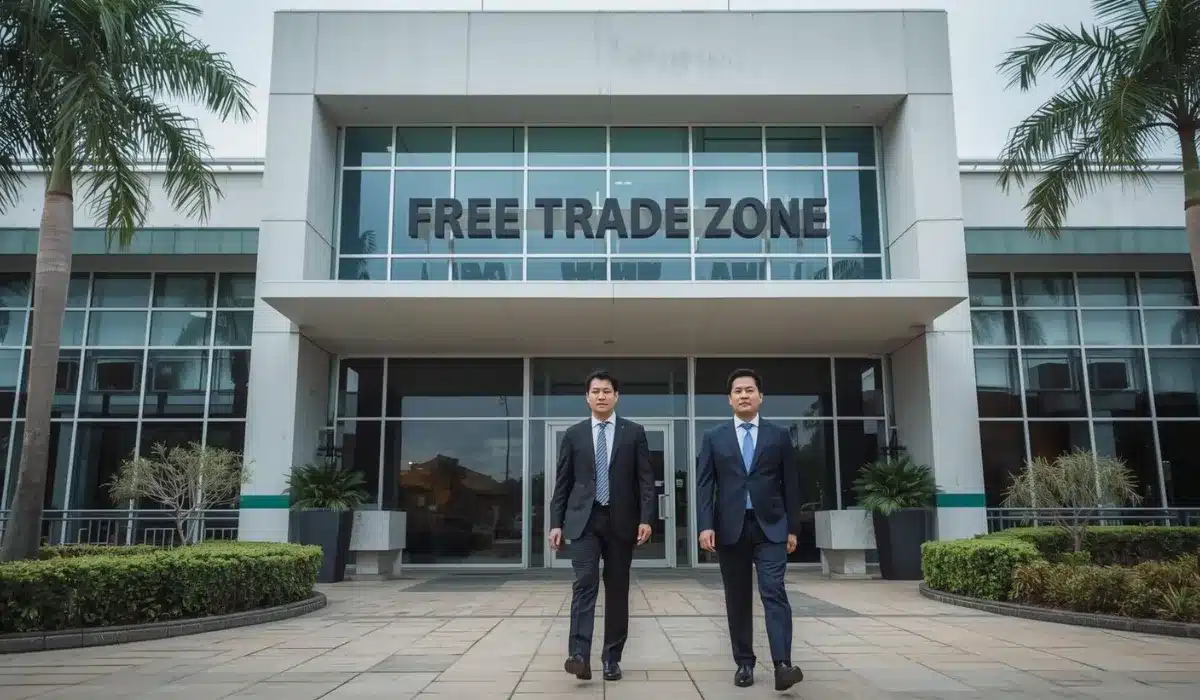
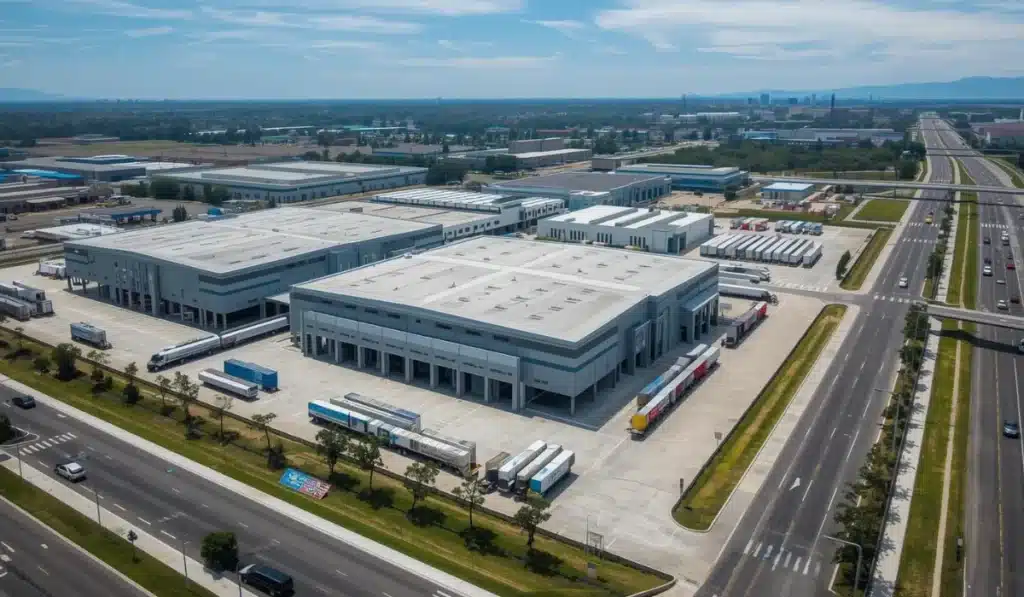
The Free Trade Zone regime in El Salvador is a special legal framework that allows companies, both domestic and foreign, to operate under a set of tax and customs benefits aimed at promoting exports, job creation, and investment. This system is regulated by the Law of Industrial and Commercialization Free Zones (Decree No. 405) , in effect since 1998 but updated in December 2025 to adapt to new international trade dynamics.
How They Work in 2026
The system allows companies to establish themselves in geographically delimited areas (industrial parks) where goods are considered outside the national customs territory for import and export tax purposes. This means companies can import raw materials, machinery, and equipment without paying tariffs or VAT, as long as their final production is intended for export.
Recent reforms introduced the concept of “Free Importation” (Libre Internación) , allowing the introduction of goods into the national territory exempt from Import Tariff Duties (DAI) and VAT, provided that established legal assumptions are met.
📌 Find rental properties near industrial zones with Carvi
Difference between Free Zones and Industrial Parks
- Free Trade Zones: Physically delimited industrial parks with shared infrastructure (security, utilities, access roads), where multiple companies operate under the Free Zone regime.
- Deposits for Active Processing (DPA): A modality allowing an individual company to operate with the same tax benefits as a Free Trade Zone, but at its own location outside an industrial park.
For more context on business models, see our guide on businesses for Salvadorans abroad.
Tax Benefits and Incentives (Updated 2026)
The December 2025 reforms have significantly expanded incentives, conditioned on real investment and job creation.
| Benefit | Description |
|---|---|
| Income Tax (ISR) Exemption | Initial 10‑year term. Extension of up to 10 additional years if investment and employment are doubled. |
| Minimum Investment for Extension (FZ) | US$ 500,000 |
| Minimum Investment for Extension (DPA) | US$ 800,000 |
| Import Tariff Exemption | Free importation of machinery, equipment, raw materials, supplies (exempt from DAI). |
| VAT Exemption | On local purchases of goods and services necessary for operations. |
| Municipal Incentives | Exemptions from license and operation fees (depending on municipality). |
| Grace Period | 2 years for current beneficiaries ending their term to make new investments without losing benefits. |
| Green Area Flexibility | 20% of total area, part can be located outside the complex with authorization. |
Key Note for CFOs and Planners: Free Zone incentives can be applied for more than once, allowing structured growth phases.
New Law for the Promotion of Investment Expansion (2026)
Complementing the Free Zone regime, this law offers incentives for companies already operating in El Salvador that wish to expand:
- Tax credits of 10%, 20%, or 30% of the amount invested
- Total exemption from ITBI (Property Transfer Tax)
- 10‑year stability guarantee
Explore car rental models for operational logistics.
Foreign Companies Entering El Salvador (2025–2026)
This section answers the most frequent queries from Google Search Console, such as “latest foreign brand entering El Salvador 2025/2026” and “new foreign brand enters El Salvador.”
In 2025 and early 2026, El Salvador has witnessed increased interest from international firms, particularly in:
- Textiles and apparel (leveraging the new US trade agreement)
- Auto parts and metal structures (new Free Zones in La Libertad and Sonsonate)
- BPO and contact centers (bilingual talent and CST time zone)
While specific brand names are often under nondisclosure agreements during setup, the Salvadoran Textile Manufacturers’ Association (CAMTEX) reports active negotiations with at least six US and Asian firms considering relocation or expansion into Salvadoran Free Zones in 2026.
The reciprocal trade agreement with the United States (November 2025) , eliminating tariffs on textile and apparel products, has been a decisive factor.
📌 Start your business expansion in El Salvador with Carvi support.
Nearshoring Opportunities for US Companies
Why El Salvador Is Attracting US Firms
- Proximity: 2–3 hour flight to Miami, 4–5 hours to Houston → shorter response times than Asia.
- Dollarized economy: No exchange rate risk.
- CAFTA‑DR plus new 2025 agreement: Tariff elimination on key products.
Cost Advantages vs Mexico & Colombia
- Competitive labor costs (entry-level BPO salaries remain affordable)
- Lower logistics costs for serving the US Southeast
- Less saturated market for niche manufacturing
See how tourism as an investment in El Salvador complements industrial nearshoring.
Geopolitical Context: US Tariffs and Legitimate Triangulation
In 2025, the US implemented:
- 25% tariff on steel and aluminum
- Universal 10% tariff on all imports, with higher rates for ~70 countries
El Salvador offers legitimate triangulation – genuine industrial transformation (assembly, light manufacturing) that meets rules of origin, not simple repackaging.
🔒 Secure strategic housing for your team with Carvi.
Best Free Trade Zones in El Salvador
In September 2024, construction of 5 new Free Zones was announced – the first in 14 years – in La Libertad (2), Sonsonate (2), Santa Ana (1), and San Vicente (1).
Key Sector Data (CAMTEX)
- Total Free Zones in operation: 17 + 5 under development
- Companies in parks: ~120
- Companies under DPA regime: over 100
- Direct employment: ~63,000
- Indirect employment: ~120,000
Main Industrial Parks by Sector
| Free Zone / Location | Main Sectors |
|---|---|
| San Salvador Metro Area | Textiles, apparel, BPO, logistics |
| La Libertad | Light manufacturing, auto parts (new) |
| Santa Ana | Textiles, agribusiness |
| San Miguel | Logistics, manufacturing |
| New projects (2024‑2026) | Auto parts, metal structures, food |
When visiting these zones, reliable transportation is key. Consider 4×4 car rental El Salvador or car rental San Salvador for executive mobility.
Requirements to Establish a Company in a Free Zone
Legal Process
- Company incorporation (Sociedad Anónima – S.A.) : 2‑3 weeks
- DGA Solvency application (free, 5 business days)
- MINEC qualification (4‑8 weeks)
- Municipal/OPAMSS permits (4‑6 weeks)
Total estimated time: 3–5 months
Investment Requirements
- Initial investment to qualify: varies by sector
- Minimum to access benefit extensions: US$ 500,000 (FZ) or US$ 800,000 (DPA)
📄 For more details, see car rental without a credit card in El Salvador and car rental without a deposit for logistics planning.
Specific Customs Requirements
You must obtain a Customs Obligation Solvency from the General Directorate of Customs (DGA). Documentation includes incorporation deed, shareholder identification, legal representative data. Submit online to [email protected] or in‑person at Km 11½ Panamericana Highway, San Bartolo.
Consider theft insurance for car rentals in El Salvador for asset protection during setup.
Economic Sectors Operating in Free Zones
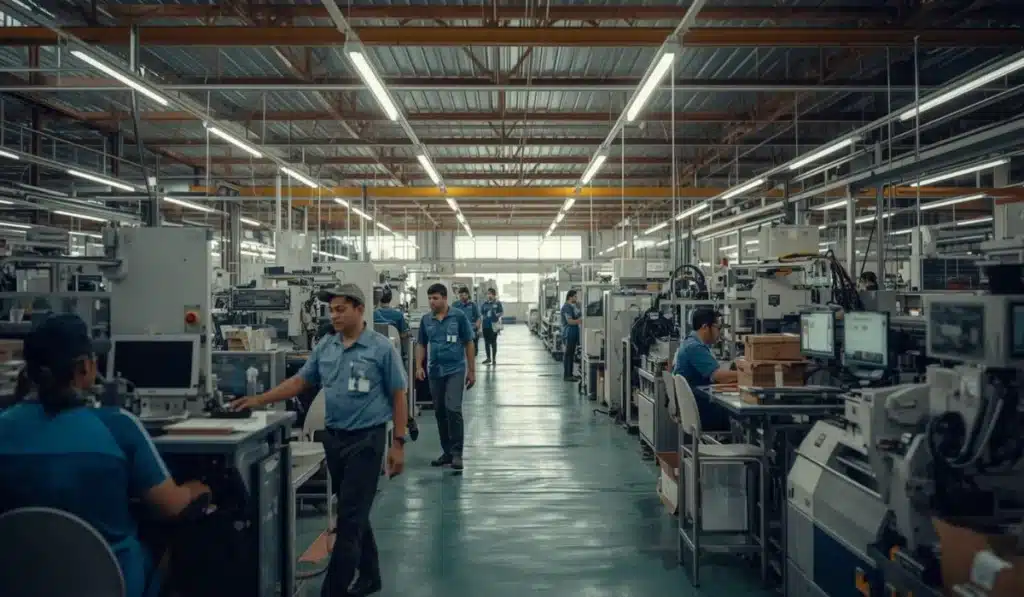
Textile and Apparel
- 30% of total exports; 11th largest supplier of apparel to the US
- Main products: socks, synthetic blouses, cotton sweaters, underwear, t‑shirts
- 2026 outlook: moderate growth of 2‑3% after tariff elimination
Light Manufacturing and Electronics
Growing potential for electronic components and medical devices. Supported by the Law for the Promotion of Innovation and Technological Manufacturing.
Logistics and Warehousing
Leveraging central location as a regional distribution hub for cross‑border e‑commerce.
Business Process Outsourcing (BPO)
- Bilingual talent pool with cultural affinity to the US
- Competitive salaries vs Latin American peers
- CST time zone enables real‑time collaboration
For executives scouting locations, car rental El Salvador provides flexibility to visit industrial parks and BPO centers.
Future Outlook 2026–2030
Investment Trends
- GDP growth projected at ~4.5% for 2026
- Infrastructure investments: Pacific Train, airport expansions, renewable energy
- Tourism boom (Surf City) generating collateral demand
Government Policies
- December 2025 Free Zone reforms
- Proposed reviews of 18 laws including International Services Law, E‑commerce Law, and Renewable Energy Incentives
🌱 Learn about safe tourism in El Salvador and ruta de las flores for executive retreats.
Frequently Asked Questions
Can a foreign company be 100% owner?
Yes. No discrimination against foreign investors.
What percentage of production must be exported?
Generally over 90%. “Free Importation” allows limited local sales under specific conditions.
Can I sell in the local market?
Yes, but with specific authorization. The general rule remains export orientation.
How long do tax benefits last?
Initial 10 years, extendable up to 10 additional years if investment and employment doubled.
What requirements must I meet before Customs?
Customs Obligation Solvency (free, 5 business days) with incorporation deed, shareholder IDs, legal representative docs.
Can my existing company benefit without being a Free Zone?
Yes, through the Law for the Promotion of Investment Expansion (2026) (tax credits of 10‑30% and ITBI exemption).
Tourist and Lifestyle Benefits for Investors and Teams
El Salvador offers more than industrial advantages. While your company operates in Free Zones, your team can enjoy:
- Beaches: El Tunco vs El Sunzal and best beaches to visit by car
- Nature: Cerro Verde National Park, Lake Coatepeque, volcanic tourism
- Culture: Suchitoto colonial tourism, Concepción de Ataco murals
- Gastronomy: Family restaurants, gastronomic tourism, gastronomic routes
Explore tours in El Salvador and tourist attractions for executive team building or client entertainment.
📌 Ready to invest? Discover premium locations with Carvi today.
Conclusion: Is El Salvador a Good Option for Free Trade Zone Investment?
Summary of Strategic Advantages in 2026
- ✅ Updated legal framework (Dec 2025 reforms)
- ✅ Preferential US access (tariff elimination on textiles)
- ✅ Dollarized economy – no exchange risk
- ✅ Proximity and fast response times
- ✅ Bilingual talent + sustainable production chain
- ✅ New Free Zones + infrastructure expansion
- ✅ ~4.5% GDP growth projection
Final Considerations
The 2025 reforms raise compliance standards but generously reward real investment and job creation. For companies evaluating expansion in Central America, El Salvador offers a reliable, legally sound platform for genuine production processes that meet rules of origin.
The time is now. With a new legal framework, a strengthened trade agreement with the United States, and nearshoring momentum, El Salvador stands as the most competitive destination in Central America for Free Trade Zone investment.
👉 Schedule a site visit. Our strategic partners, including executive mobility services like Carvi, can make your prospecting trip productive, safe, and efficient.
This guide is updated for 2026. For specific legal or tax advice, consult a qualified professional in El Salvador.
Share this content: